
Artisanal Porous Cane Sugar vs. Refined White Sugar: A Technical B2B Comparison
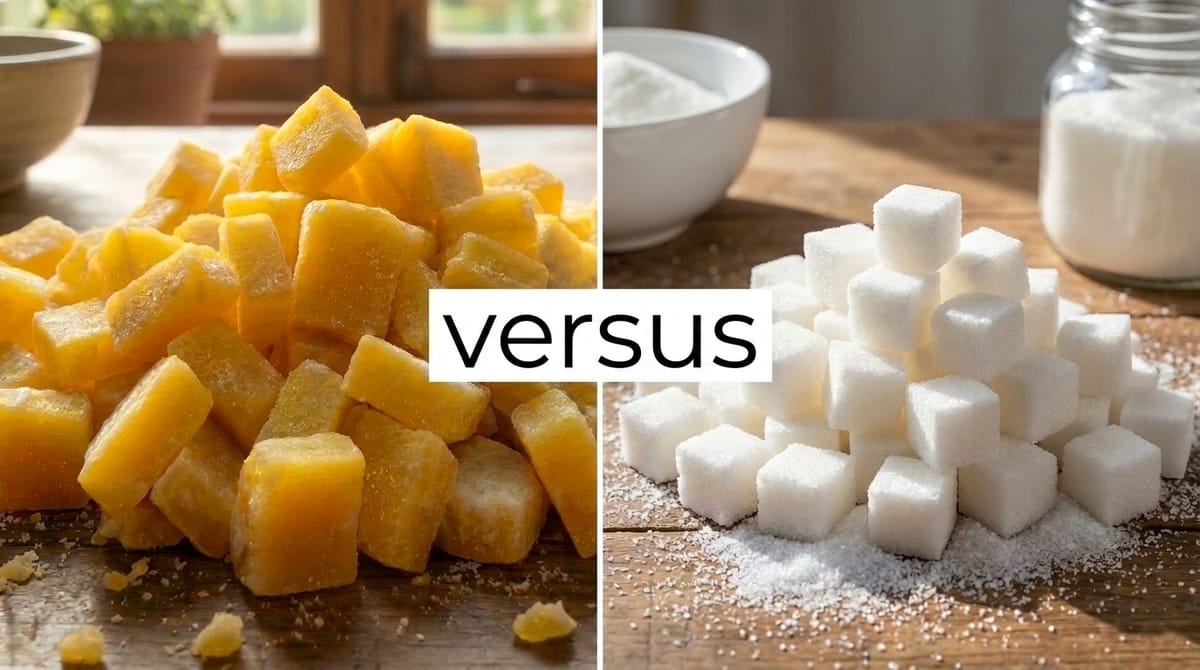
In the global food and beverage manufacturing industries, the choice of sweetening agents has shifted from purely functional cost considerations to health-centric, clean-label evaluations. This analytical report contrasts traditional non-centrifugal cane sugar (NCCS), specifically Quang Ngai Porous Cane Sugar (Đường Phổi), against industrially Refined White Sugar (Sucrose). It evaluates their respective manufacturing processes, nutrient retention profiles, glycemic impacts, and culinary-medicinal properties, supported by peer-reviewed research and traditional medicine literature.
1. Processing Methodology and Nutrient Profiles
The fundamental differences between refined sugar and artisanal porous cane sugar stem from their manufacturing pathways: - Refined White Sugar: Refined sugar is processed through centrifugal separation, carbonation, and chemical bleaching (using sulfur dioxide or calcium hydroxide) to yield 99.9% pure sucrose (WHO, 2015). This process strips all organic compounds, mineral ash, and molasses. - Quang Ngai Porous Cane Sugar (Đường Phổi): In contrast, Đường Phổi is a non-centrifugal cane sugar produced via thermal evaporation of sugarcane juice. It relies on a natural clarification agent—chicken egg whites and betel lime—which coagulates and binds to colloidal impurities (Nguyen, 2019). Because it bypasses centrifugation and chemical bleaching, it retains the natural mineral ash and molasses fractions.
Table 1: Mineral Composition Comparison (mg/100g)
| Nutrient | Refined White Sugar | Quang Ngai Porous Cane Sugar (NCCS) |
|---|---|---|
| Calcium (Ca) | Trace (< 1.0) | 80.0 - 150.0 |
| Iron (Fe) | Trace (< 0.1) | 1.5 - 3.0 |
| Magnesium (Mg) | Trace (< 0.5) | 20.0 - 40.0 |
| Potassium (K) | Trace (< 2.0) | 150.0 - 300.0 |
(Source: Adapted from Asikin et al., 2018)
2. Analysis of Strengths and Weaknesses (SWOT)
A. Quang Ngai Porous Cane Sugar (Artisanal NCCS)
- Strengths (Advantages):
- Rich Nutrient Retention: Retains key bioactive compounds, minerals, and polyphenols that possess antioxidant properties (Asikin et al., 2018).
- Clean Label & Organic Appeal: Zero chemical bleaching agent residues ($SO_2$), satisfying premium consumer segments and international regulations (e.g., EU food safety controls).
- Traditional Therapeutic Values: Documented in traditional East Asian medicine as a natural demulcent to soothe respiratory tracts, moisten the lungs, and resolve coughs (Li, 1578; Nguyen, 2019).
- Unique Sensory Profile: Light, porous, crispy texture with a delicate caramelized aroma that enhances premium culinary applications.
- Weaknesses (Disadvantages):
- Lower Sweetness Standardization: Variations in sugarcane harvests lead to minor batch-to-batch variations in moisture and taste compared to pure sucrose.
- Shorter Shelf Life: Higher hygroscopicity (tendency to absorb moisture) requires advanced protective packaging (e.g., barrier bags) to prevent liquefaction.
- Higher Production Cost: Manual, labor-intensive cooking limits bulk volume scalability.
B. Refined White Sugar (Pure Sucrose)
- Strengths (Advantages):
- High Purity and Stability: Standardized 99.9% sucrose ensures highly predictable behavior in industrial baking, fermentation, and long-term storage.
- Low Cost and Scalability: Cheap, mass-produced commodity accessible globally.
- Neutral Flavor Profile: Provides sweetness without altering the color or aroma of the end product.
- Weaknesses (Disadvantages):
- High Health Risks: Linked directly to obesity, metabolic syndrome, and insulin resistance due to rapid glucose absorption (WHO, 2015).
- Chemical Processing: Subject to bleaching chemicals, which are increasingly rejected by modern health-conscious consumers.
- Nutritional Emptiness: Contains zero vitamins, minerals, or active biological enzymes ("empty calories").
3. Metabolic and Therapeutic Insights
Refined sugar's rapid absorption kinetics lead to sudden glucose spikes in blood plasma, overloading the pancreas and forcing high insulin secretion (WHO, 2015). Conversely, non-centrifugal sugars contain complex carbohydrates and trace minerals like chromium and potassium, which assist in insulin sensitivity and slow down digestion (Asikin et al., 2018).
Furthermore, in traditional clinical practice, the porous structure of Đường Phổi acts as a physical demulcent. The egg-white-clarified sucrose crystals dissolve slowly in oral mucosa, coating the throat to reduce friction and suppress dry coughs, a practice widely cited in traditional medicine manuals (Nguyen, 2019).
4. B2B Sourcing and Technical Specifications
For commercial food manufacturers, sourcing premium ingredients demands strict compliance: - Specifications: Greenie Vietnam's Quang Ngai Porous Cane Sugar conforms to a maximum moisture content of 4.5% and zero chemical bleach detection. - Traceability: Batch tracking from Tra Khuc river alluvial sugarcane farms ensures EUDR (European Deforestation Regulation) compliance.
To request a Certificate of Analysis (COA) or laboratory samples, please contact our B2B Export Division directly at hello@greenievietnam.biz.vn.
References
- Asikin, Y., Kamiya, A., Mizu, M., Takara, K., Wada, K. and Takahashi, M., 2018. Changes in the nutritional and sensory profiles of non-centrifugal cane sugar during processing. Journal of Food Science and Technology, 55(11), pp.4355-4364.
- Li, S., 1578. Bencao Gangmu (Compendium of Materia Medica). Edition published in Beijing.
- Nguyen, T.D., 2019. Traditional Vietnamese Medicine and Culinary Herbs. Hanoi: Medical Publishing House.
- WHO, 2015. Guideline: Sugars intake for adults and children. Geneva: World Health Organization.